| Muses Review Muses Speak- Poetry Newsletter Short Interviews With Poets: Summer 2005 July 2005 - Sep 2005 |
| editor@musesreview.org |
| Back to: Interviews With Poets - Contents |
Short Interview No. 5: Joyce Gullickson Muses Speak - Poetry Newsletter - August 2005. From: gullicks6@aol.com Date: Thu, 7 Jul 2005 20:09:48 EDT Subject: Re: Questions for Featured Poets in Muses Speak To: musesreview@yahoo.com 1). AA: Why do we compose poetry? Joyce, "Poetry is the music of my soul. I enjoy the process of writing, choosing just the right word is somehow magical for me. Mike enjoys seeing the words I erase! But, I digress. Writing allows me to find beauty in an often complex, confusing world." 2). AA: Can people make a living by being a poet? Joyce, "I believe its possible to make a living as a poet, although most poets are also novelists, teachers or employed in other fields, like nursing. It would be hard to make a living dependent solely on poetry. Most of us are just starving artists who truly love the art of writing." 3). AA: What makes a poetry book a bestseller? Joyce, "Best sellers in poetry? Hmm... I guess name recognition counts. As for me, I tend to buy collections of works or if I read a poet, say in the New Yorker, and his/her words speak to me on a personal level, then I'll want to read more...so, I head to the local bookstore, or the library or on-line if its midnight, and see what I can find." 4). AA: What are your favorite themes? Joyce, "My favorite themes are those which deal with relationships between people, our emotions, responses and reactions to the world around us. I enjoy taking spiritual journeys, discovering hidden truths, and illuminating the darkness. As a nurse, I deal with death and dying, and our fear of it, also our fear of loss, losing the one we love the most. I hope to leave a part of myself behind for those I love. I like writing answer poems and have written poems in answer to Langston Hughes, John Ciardi, William Stafford, Mary Oliver, and of course, my absolute favorite, Mike Gullickson. We have a lot of fun with this." 5). AA: Why should people read poetry? Joyce, "Because they want to." Poetry can open doors, and enlighten people." 6.) AA: What makes a poem extra-ordinary? Joyce, "For me, an extra- ordinary poem crosses all barriers and has many different meanings and interpretations all dependent upon the reader. For example, my poetry speaks of our struggles to survive, but also of our need for finding joy in life and living." |
Short Interview No. 4: Mike Gullickson Muses Speak - Poetry Newsletter - July 2005. From: gullicks6@aol.com Date: Thu, 7 Jul 2005 20:09:48 EDT Subject: Re: Questions for Featured Poets in Muses Speak To: musesreview@yahoo.com 1). AA: Why do we compose poetry? Mike, "Because I must. A simplistic answer I know but you might as well ask a bird why it flies, or a glacier why it moves. The need to write overwhelms me and it burns inside until I let it out." 2). AA: Can people make a living by being a poet? Mike, "They can make a life as a poet. The amount of poets writing - even writing well- is staggering. The amount of poets making survival income on poetry alone could probably fit in a 10 x 12 room. Song writers and jingle writers and greeting card writers can make a living, but poets- very unlikely." 3). AA: What makes a poetry book a bestseller? Mike, "Popularity in another field. A book of poems by Jewel or Britney Spears or even Mike Tyson has a chance of being a best seller but I doubt a true poet covets such fame." 4). AA: What are your favorite themes? Mike, "The interconnectedness of each of us with our separate selves, the universe and nature. I also enjoy writing poems based on the daily news." 5). AA: Why should people read poetry? Mike, "To connect themselves. To understand their place in the world. To inspire themselves to create. To open a hole in space and step into it." 6.) AA: What makes a poem extra-ordinary? Mike, "The feeling that you experience what the writer felt when he wrote it. The need to read it over and over again and make it part of the rhythm of your existence. Pure light. Pure joy. Understanding and comprehension. Read Walt Whitman or William Stafford. You will see what I mean." |
| Short Interview No. 6: Ellaraine Lockie Muses Speak- Poetry Newsletter - September 2005 From: "elockie@comcast.net" To: musesreview@yahoo.com CC: elockie@comcast.net Date: Mon, 11 Jul 2005 17:50:33 -0400 Subject: Answers to Questions for Featured Poets in Muses Speak Dear Andrew, In the enclosed attachment are my answers to your interview questions. If the attachment won't open, please let me know and I'll send them inside an e-mail. Also, would you please let me know that you got this, since I am sending it on a library computer. Thank you. I look forward to spending some time perusing your website when I get home. Best, Ellaraine E.L. stands for Ellaraine Lockie. MR stands for Muses Review. 1). MR: Why do you like to compose poetry? E.L. People like me write poetry because we have to. It's our lifeline, a passion that often overpowers everything else. It isn't always convenient or polite. I've been known to put pen to cocktail napkin for the sake of a poem during conversations at parties, pen to program at funerals and pen to arm while driving and lovemaking. 2). MR: Can poets make a living by writing poetry? E.L. Generally, poets would need to resurrect from the dead to make a continued living from poetry. I suspect that most poets value money from their poems more as a validation than for an income. My poetry money gets squirreled away in a separate fund and seems somehow more special than what I make from nonfiction books, articles and essays. Many of us poets make more money through poetry-related jobs like teaching workshops and consulting than from selling our poems. 3). MR: What makes a poetrybook a bestseller? E.L. I'm not sure there have been many best selling books of poetry if we're using the conventional definition of "bestseller", involving mass sales to the general public. Shel Silverstein comes to mind (and to Costco) with his fourteen million books in print and long runs on the New York Times bestseller lists of books full of zany, witty and fun-to-read poems. A large publisher willing to promote, good reviews and/or luck seem like essentials in creating a bestseller book of any kind. 4). MR: What themes do you like in writing poetry? E.L. I write about any subject that moves me in some strong way. Focuses so far have been: women's midlife years, relationships, illicit love, eroticism, international travel, Montana (where I grew up), endings of all kinds and nature in the form of haiku. But I have as well a big file containing poems in just about any general category. My chapbooks have each had themes. At the risk of bordering on repetition within each chapbook, I still like the continuity that a binding theme gives a smaller collection of poems. 5). MR: Why should people read poetry? E.L. People should read poetry because it is truth stripped bare. It readily reveals what is often obscured in the text of other writing genres. With poetry's economy of words, there comes concentrated power that can be life-changing in readers. Poetry creates those "Ah ha!" moments when it says what readers can't or won't say for themselves. Poetry also can offer readers a certain kind of therapy akin to what one might find in a supportive friend. I've gotten a flood of responses from menopausal women who found comfort in reading my two midlife chapbooks. One fifty-year old woman said she keeps them on her bedside stand and re-reads a few poems every night because then she doesn't feel so alone and peculiar. Another ordered copies for each member of her support group and used the poems as spring boards for discussion. And then there's the sheer beauty of well-chosen words in a good poem--the way words slide off the tongue in a lyrical way. There's great satisfaction in reading them silently and music in reading them out loud. 6.) MR: What makes a poem extra-ordinary? E.L. I think what constitutes an extraordinary poem is highly relative to the reader. I've noticed when judging contests using several judges, that there is fairly consistent agreement on the top 10-15 percent. However, when it comes down to choosing the top three winners, we each have our unique measuring sticks. My definition of an extraordinary poem is one that is accessible (understood without an interpreter after a couple of readings), uses numerous poetic devices, addresses matters that have far-reaching appeal and haunts the reader into multiple readings. The last extraordinary poem I read was in a bookstore recently-"Gate C 22" by Ellen Bass. It was about a couple kissing hello at an airport like there was no tomorrow. I don't know how many times I've watched and envied a similar couple's ardent public greeting or parting. Ms. Bass's poem so eloquently captures that scene and brings us into it with astute observations, powerful images and fresh language. I know I'll go back and buy the book, Pushcart Prize XXVIII, just to have this poem. |
 |
|
Short Interview with Ellaraine Lockie. |
|
|
Short Interview with Joyce Gullickson |
Short Interview with Mike Gullickson |
| About Mike Gullickson. Mike and his wife Joyce is the author of the poem chapbook: Bridges. |
| Photo to be posted soon. |
| Mike Gullickson is based in Texas |
| Joyce Gullickson is based in Texas |
| Photo to be posted soon. |
 |
|
| About Ellaraine Lockie Ellaraine Lockie is the author of 4 poem chapbooks. Her latest and fourth chap is Finishing Lines published by Tickeled By Thunder Press at www.tickledbythunder.com and you can buy the chap at her homepage: www.musesreview.org/ellarainelockie.html. |
| Ellaraine Lockie is based in California |
|
|
 |
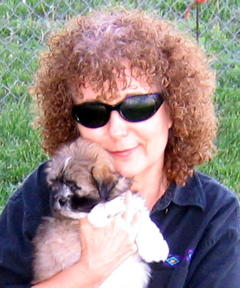 |
| About Joyce Gullickson. Joyce and her husband are the author of the poem chapbook: Bridges. |